Hiromu Arakawa’s newer series, Daemons of the Shadow Realm, has sent many readers back to the work that defined her international reputation: Fullmetal Alchemist. For viewers trying to revisit the franchise in 2026, the main question is practical as much as cultural: which version to watch, and where it is available.
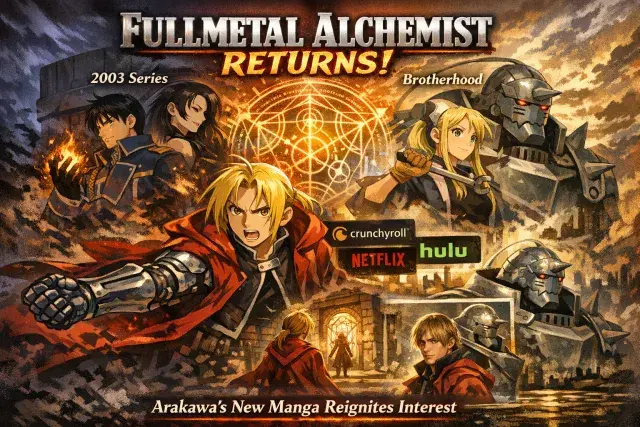
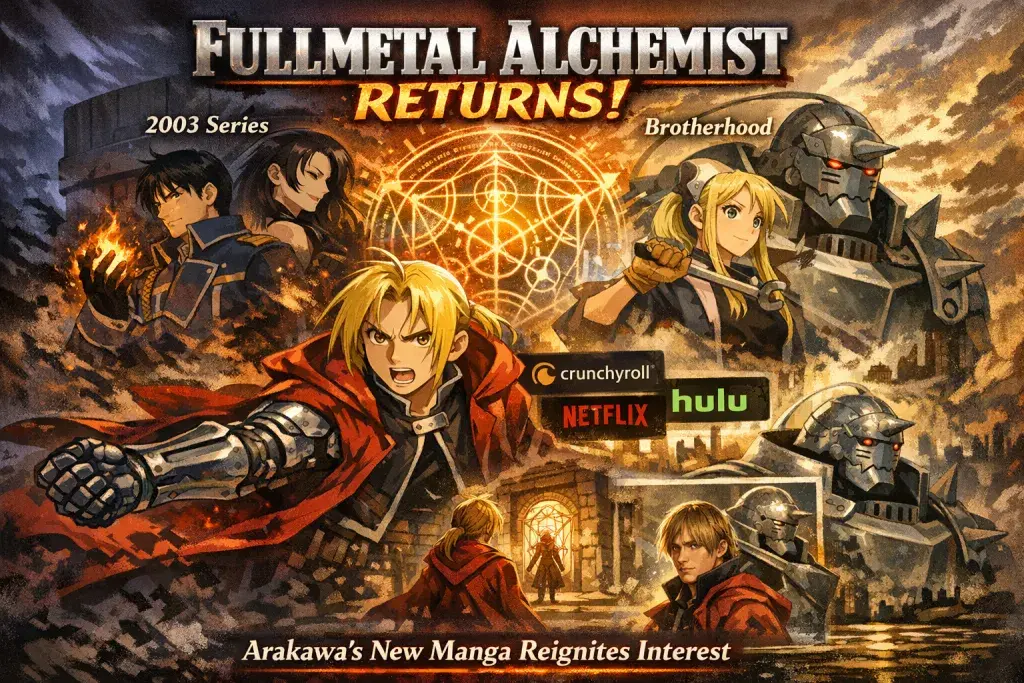
Both major anime adaptations remain widely accessible. Fullmetal Alchemist from 2003 and Fullmetal Alchemist: Brotherhood are available on Crunchyroll, while Brotherhood is also listed on Hulu and Netflix, according to the provided platform information.
Why the franchise still holds such a strong pull
Fullmetal Alchemist has lasted because its premise is unusually durable. Edward and Alphonse Elric’s failed attempt to revive their mother gives the story a clear emotional core, but Arakawa built that grief into a larger system of rules, ethics, and state power. The principle of Equivalent Exchange is more than a fantasy concept; it frames the series’ argument that every human desire carries a cost, and that political systems often hide who is made to pay it.
That combination helped the franchise stand apart from many of its contemporaries. It moves between intimate loss and national conspiracy without losing coherence, and its interest in militarism, artificial life, and moral compromise gives it a reach beyond standard adventure storytelling. Readers discovering Arakawa through her newer work often find that the older series still feels unusually modern in how it treats authority and human experimentation.
Choosing between the 2003 series and Brotherhood
The two anime versions are not interchangeable. The 2003 adaptation began before the manga had finished, so it eventually develops its own story and tone. It is darker, more inward, and often more willing to sit with ambiguity. Brotherhood, released later, tracks the manga far more closely and delivers the fuller political and philosophical architecture many fans now associate with the franchise.
For a first-time viewer, Brotherhood is usually the clearer entry point because it presents the complete arc Arakawa is best known for. The 2003 series remains worth watching for those interested in adaptation history and in how the same premise can support a very different emotional register. Seen together, they offer a rare case study in how anime production timelines can shape narrative outcomes.
Where to stream the series and the live-action film
Crunchyroll remains the most comprehensive option because it carries both anime series. Hulu and Netflix provide access to Fullmetal Alchemist: Brotherhood, making that version easier to find for viewers already paying for broader entertainment bundles. The live-action Fullmetal Alchemist film from 2017 is primarily available on Netflix based on the context provided.
Subscription cost may shape the decision as much as catalog depth. Netflix’s current listed plans range from an ad-supported standard tier to a premium 4K option. Crunchyroll’s pricing is referenced in the source material, though the specific tiers are not fully detailed there, so viewers should verify current plan features before subscribing.
The larger streaming question: access depends on region
Anime availability is still defined by territorial licensing, which means a title listed in one country may not appear in another. That is why many streaming guides now mention VPN services alongside platform names. In general, VPNs are marketed as tools for privacy, encryption, and access to region-specific libraries, though viewers should also be aware that streaming platforms may restrict or discourage this depending on their terms of service.
The larger point is that Fullmetal Alchemist has entered the category of canonical modern anime: widely distributed, frequently rediscovered, and continually reframed by new work from its creator. Arakawa may have drawn audiences forward with Daemons of the Shadow Realm, but the renewed attention also shows how firmly the Elric brothers’ story remains embedded in anime culture.